- ISL Robotics
- ISL Safety
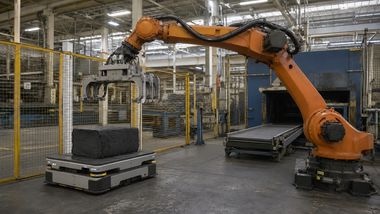
Physical AI for Hazardous & Labor-Intensive Work
The robotics foundational models plan and execute actions, gated by Kavach safety before they reach the actuator.
Foundational Models for Physical AI
A neuro-symbolic modular platform for physical AI.
Machines that act — and a layer that decides whether they may.
 Companion
 Mobile
 Industrial arm
 Quadruped
 Underwater
 Humanoid
 CCTV
CCTV Car
Car
Three classes of foundational model — perception, action, safety — each independently versioned and licensable, each running as a cloud API or inside the control loop on the device.
 Vision
 First-person
 DrishtiVision
 ShrutiAudio
 SparshTactile
 KriyaVision-Language-Action policy
 Foundation + world modelPrana + KarmaA reasoning core that predicts what happens next and what to do next.


 Industrial arm
 Precision cell
Model evolution
4B → 12B
A unified family of Vision–Language–Action policies for contact-rich manipulation.
4B → 16B
World model — predicts how objects, people and other agents will respond before the machine acts.
9B → 37B
Flagship omni-conditioned foundation model with a dual-brain architecture — one family that perceives the world, anticipates what comes next and acts across any embodiment.
Kriya and Karma, live today — single-arm cells, verified at control rate
Uses vision, proprioception and wrist force–torque to distinguish visually similar but physically different conditions, such as successful insertion versus jamming, stable contact versus collision, or a secure grasp versus an unexpected change in load.
Prana world action model arrives
Adds multi-arm coordination, richer scene-conditioned manipulation and distributed touch from fingertips, finger links and palms. Tactile readings are attached to nodes in the hand’s kinematic graph and represented as embodiment-independent contact tokens containing location, pressure, normal force, shear and deformation. This allows contact experience to transfer across grippers and dexterous hands with different finger counts, joint structures and tactile layouts.
Independent Safety Benchmarks — 1.00 prompt safety and 0.91 response safety, on Kavach v2 models already in production.
Beats every flagship model in the set on both measures.
Verdicts at control-loop latency, not datacenter latency.
The margin widens under multi-turn escalation and injection.
Prompt safety
Response safety
Same trend, larger opponents
Same benchmarking trend against large frontier reasoning models — and it holds in multimodal domains, on visual and audio guardrails, not text alone.
Into physical embodiment
Extends into physical embodiment — the same verification semantics over embodied action, every morphology.
How Every ISL Model Improves
Every improvement is earned by reinforcement learning against audited outcomes of the fleet’s own experience. One learning loop, every model class.
Real-time · Edge node
Perception, action and safety models execute inside the control loop and emit a signed trace of every inference.
Asynchronous · Cloud
A high-reasoning world model replays that trace on cloud infrastructure, adjudicating what the edge model perceived, planned and permitted.
Simulation · Lab
Confirmed misses are reproduced in simulation in generated worlds; synthetic rollouts train candidate models through reinforcement learning and self-play.
Autonomous · Test bench
Every candidate is run against an autonomous sim-to-real test bench — the same scenario executed in simulation and then on physical rigs, with no operator in the loop.
Release-gated
Improvements ship only as versioned, signed artifacts, and only after regression against the full audited trail plus adversarial testing and red-teaming.
Multiple Concurrent Streams, Each Closing a Different Data Gap.
Stream 01
40+ end tools, 100+ tasks and subtasks captured with ego-centric cameras and tactile instrumentation. Every run is scored.
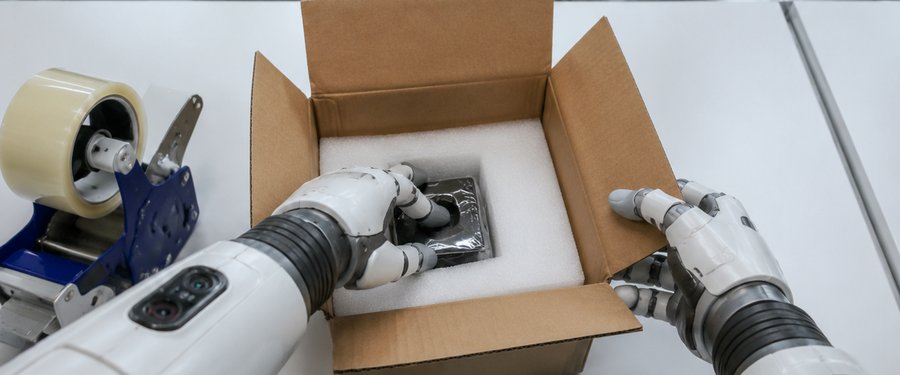
Stream 02
50+ instrumented stations streaming time-synchronised video, depth and force telemetry off work already happening.

Stream 03
Capture across homes for the household distribution, including tactile-sensing glove and 3-camera egocentric rigs.

Stream 04
Mirrors real premises and multiplies every trajectory into simulated variations, de-risking sim-to-real.

The robotics foundational models plan and execute actions, gated by Kavach safety before they reach the actuator.

Built on Shruti’s speech understanding. The system scores fluency, tracks per-child progress across the school year and surfaces classroom-level insight to teachers — with every interaction passing through Kavach realtime multi-turn trajectory analysis.

Running inside the customer’s own stack, Shruti and Kavach powering NPCs — COPPA and safety compliance carried by the Kavach safety platform.

The proving ground: ten years shipping to children.
500K robots deployed across 140+ countries, and the #1 kids robot brand in the US. Multimodal Kavach safety across conversation and generated-image evaluation.
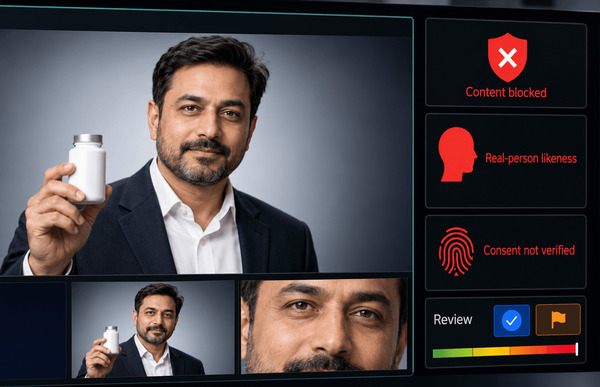 LikenessNo consent. Blocked.
Content & generated media safety
Harmful and sensitive imagery. Generated media is not just deepfakes but is verified safe, faithful, physically coherent and fit for use.
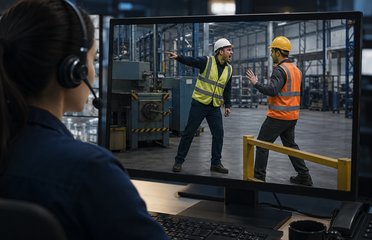 EscalationVoice and posture agree.
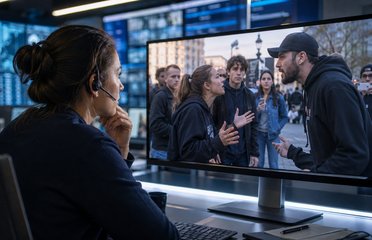 ContextLoud. No weapon, no contact.
Multimodal AI safety
One foundational model jointly analyses speech, paralinguistics and the accompanying image or video.
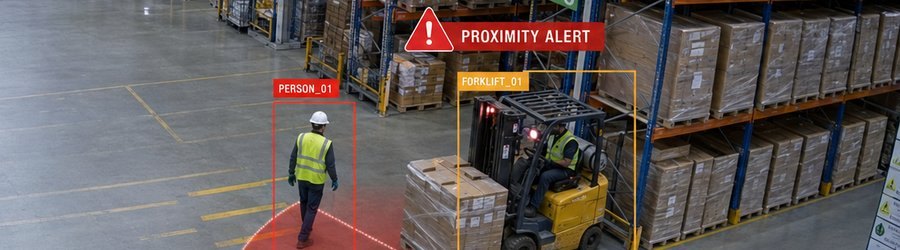 ProximityWorker inside the forklift envelope.
Outside-in camera
An outside-in safety agent expands awareness by communicating with sensors and cameras placed throughout the facility. 60+ prebuilt alerts.
01 · Manipulators · cobots
Pre-execution checking on force, velocity, reachability and workspace occupancy; power or force-limiting and protective stops on contact.

02 · Humanoids · quadrupeds
Whole-body motion, balance and force bounded around people; safe-stop and kill-switches; envelopes that hold under sensor noise, occlusion and unexpected contact.

03 · AMRs · drones
Collision-free navigation in dynamic shared spaces; bounded speed and proximity; safe-stop and fallback on sensor loss.

04 · Outside-in
Kavach v4 runs a two-brain system: outside-in for early warning, onboard for the metric bound that gates the actuator. Disagreement is never averaged — it is scored as uncertainty, and the envelope tightens.
Every robot will need a reason to be trusted.